

*Information was verified on February 20, 2026, and some parts have been updated with the latest information. Currently, the business activities of "SECTIO" are on hold. Updates will be provided once activities resume.*
Have you heard of a fashion brand designed by people with disabilities and physical therapists, who are experts in body mechanics?
Due to disabilities, some people can't wear the clothes they want. They feel they can't be fashionable.
"SECTIO" offers fashion that solves these concerns for people with disabilities while also appealing to those without disabilities.
This time, we interviewed Taimon Kawazoe, the representative of SECTIO.
Mr. Kawazoe, while working as a physical therapist conducting rehabilitation for many clients, founded SECTIO and is set to hold its first exhibition in December.
Why did he, a physical therapist, focus on fashion? We explored Mr. Kawazoe's roots and SECTIO's vision for a barrier-free society.
1. Who is Taimon Kawazoe, the Fashion Therapist?
1-1. Past and Present
[Interviewer (Writer): Akaishi / Interviewee: Taimon Kawazoe]
Akaishi: What inspired you to become a physical therapist?
Mr. Kawazoe: Actually, my father is also a physical therapist.
Having a physical therapist in the family made it a familiar career path, so I naturally followed in my father's footsteps.
Another reason is that I wanted to directly help people. Among various jobs, being a physical therapist is one of the few where you can directly interact with clients.
I wanted to do work that benefits others, so I became interested in being a physical therapist, where I can see clients' reactions firsthand.
Currently, I work at a day service, interacting with clients daily while also handling management duties.
Akaishi: Why did you shift your focus from the medical industry to the fashion industry?
Mr. Kawazoe: I've always loved fashion.
While studying to become a physical therapist in college, I was featured as a model in a famous fashion magazine and considered pursuing a career in the apparel industry.
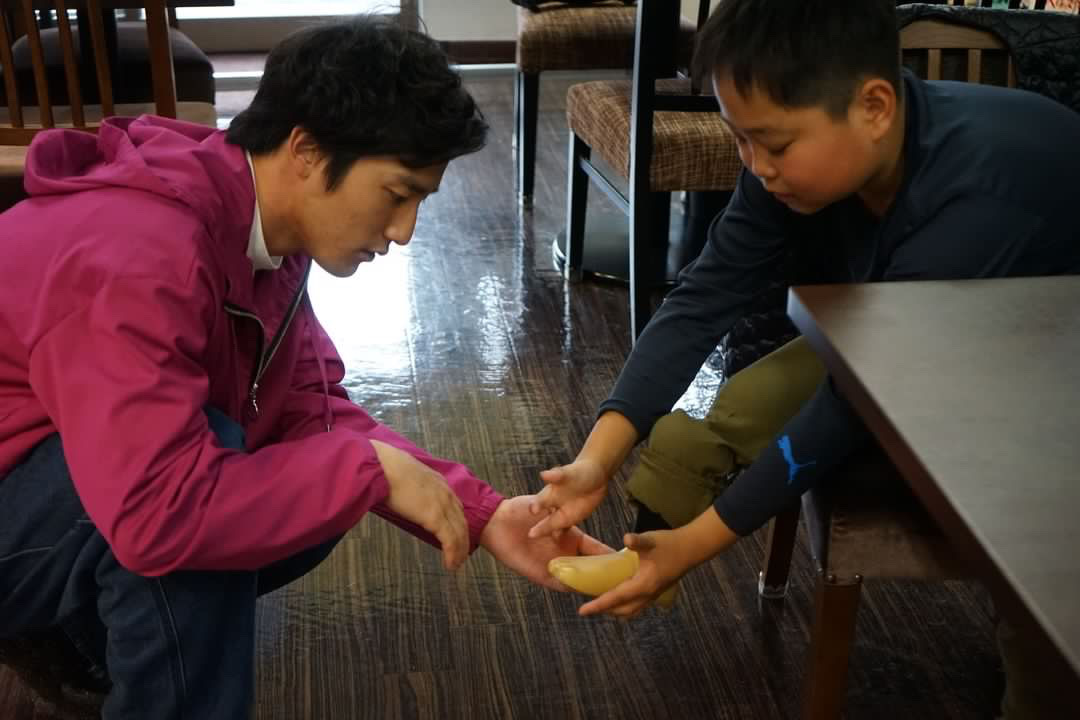
Then, I met a boy with a prosthetic leg, which became the catalyst for my current activities.
Through conversations with him, I first became aware of the clothing issues faced by people with disabilities.
By solving his problems, I realized I could utilize my physical therapist qualifications while engaging with the apparel industry I love.
That was when I first clearly saw what I needed to do. At the time, I was eager to turn my ideas into reality as soon as possible.
1-2. The Origin of the SECTIO Brand Development
Akaishi: When did you start making clothes seriously?
Mr. Kawazoe: I first attempted it in my first year as a working adult.
Immediately after getting a job, I reached out to people with disabilities and those doing similar activities via social media and conducted street surveys to connect with many people.
Then, with the support of like-minded volunteers, we decided to try making clothes.
However, it didn't go well.
At that time, I had no experience or knowledge of starting a business, and I couldn't secure the funds needed to make clothes, so we eventually disbanded.
Akaishi: So how did the current SECTIO come to be?
Mr. Kawazoe: Next, I directly negotiated with the president of the company I worked for.
The company's concept values not only clients' self-realization but also staff's self-realization, so I presented my ideas and vision to the president.
They appreciated my desire to "solve clothing issues for people with disabilities," and with the company's support as an official project, I was finally able to start making clothes.
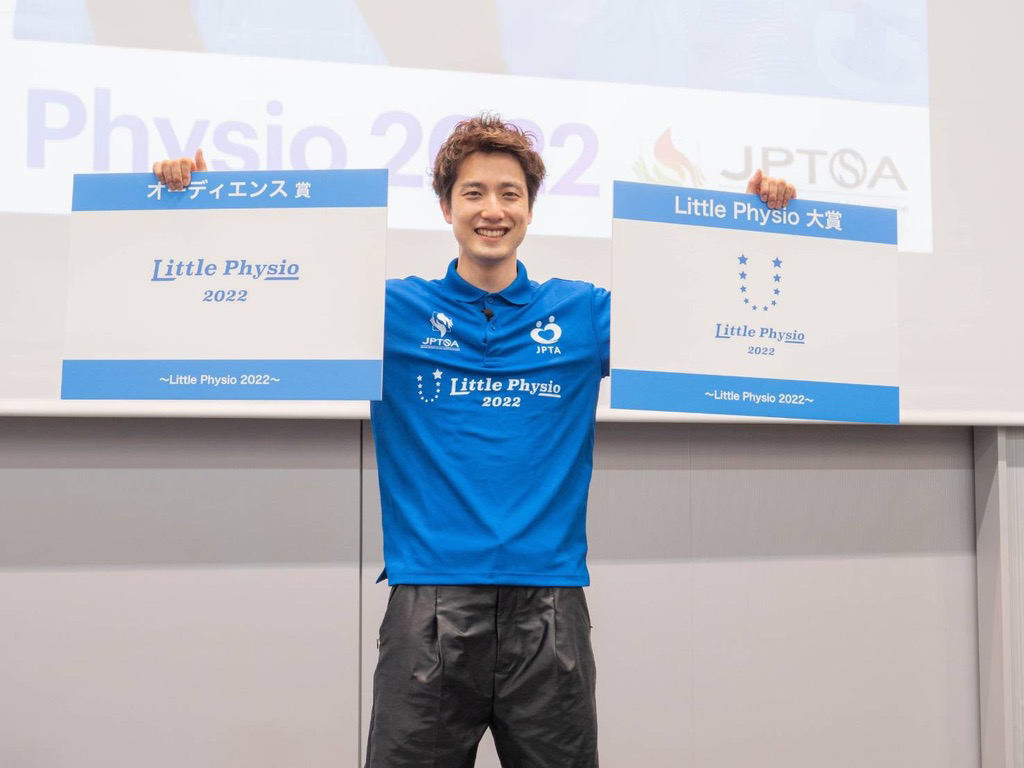
In my third year as a working adult, I participated in "LittlePhysio," a competition for physical therapists to pursue their dreams, and won the grand prize among challengers nationwide.
Source: Little Physio 2022.611|Taimon Kawazoe
After that, I moved away from the company's official project and challenged crowdfunding to operate independently. Thanks to the support of many people, I was able to establish the fashion brand "SECTIO," a dream since my college days.
Reference: Crowdfunding
2. What Kind of Brand is SECTIO?
SECTIO is a fashion brand that embraces the vision of "a world where everyone can enjoy fashion as a given." It incorporates inclusive design.
We design clothes that anyone can wear, regardless of disability, and aim to be a fashion brand that leaves no one behind by involving people with disabilities in the design and production process, in collaboration with employment support.
Clothing issues are not limited to the moments of putting on and taking off.
SECTIO leverages Mr. Kawazoe's perspective as a physical therapist to create designs that consider daily living.
Akaishi: What is the meaning behind the brand name SECTIO?
Mr. Kawazoe: SECTIO means division or cutting in Latin.
Even if you want to enjoy fashion, you can't. I feel there's a division in today's society.
SECTIO was born from meeting a boy with a prosthetic leg.
The division I feel in society and the boy who lost a leg.
The brand name is something I see every day. I named it SECTIO to never forget the origin of our activities.
3. Delving into the Appeal of SECTIO's Products
3-1. SECTIO's Unique Inclusive Design
Akaishi: How do people with disabilities participate in the design phase specifically?
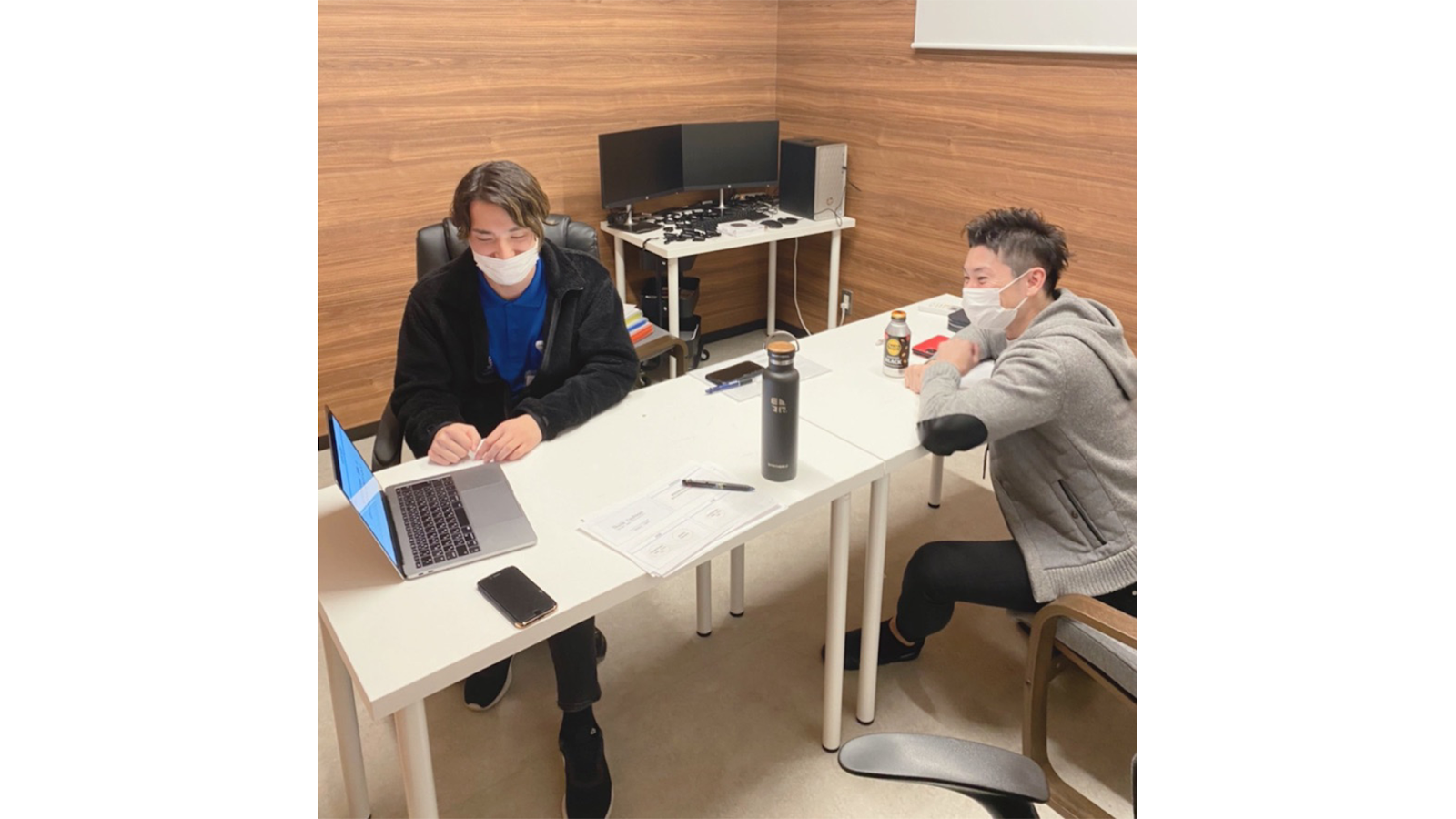
Mr. Kawazoe: At SECTIO, we limit the design focus to one individual.
Even if you group people with disabilities together, each person's physical condition is different, so incorporating too many opinions can scatter the target.
The inclusive design I can do now is to face someone deeply interested in fashion and thoroughly explore and solve one person's issues.
We identify clothing challenges, I propose functional aspects, and the designer proposes the design. We create by repeatedly aligning these elements, which I believe is my way of achieving inclusive design.
Akaishi: How does employment support play a role in the production phase?
Mr. Kawazoe: Originally, we planned to establish a continuous employment support office for production.
However, seeing the complexity and numerous steps involved in making clothes, I judged that involving people in production at this stage poses high risks.
We need to seriously focus on design first and establish the brand; otherwise, both the production process and products will end up being mediocre.
When I visited a continuous employment support office for manufacturing during college, I saw how genuinely happy the users were working.
As a physical therapist, I strongly want to contribute to expanding job opportunities for people with disabilities, so eventually, I plan to involve them in every aspect from design to production.
3-2. Designs and Functionality Infused with Taimon Kawazoe's Philosophy
Akaishi: What do you focus on most in your designs?
Mr. Kawazoe: I place a strong emphasis on functionality.
Because I still work on-site as a physical therapist, I can propose functional aspects that consider lifestyle, such as during toileting or transfers, which I feel is my strength.
However, the most important thing is whether I personally want to buy the design.
Previously, someone with a disability told me, "Clothes for people with disabilities often lack design appeal."
No matter how good the functionality is, if the design is lacking, people won't want to buy it, and SECTIO's vision of enjoying fashion as a given can't be achieved.
By adding functionality to designs that are on par with existing clothing, I believe we can truly enhance the quality of life.
3-3. A Commitment to Considering the Expressions and Emotions of Those Wearing SECTIO
Akaishi: SECTIO is promoted as "a fashion brand that leaves no one behind." What led you to this belief?
Mr. Kawazoe: It's more for myself than for others.
I enjoy dressing fashionably and am involved in fashion now.
However, you never know what might happen. There's a real possibility of becoming wheelchair-bound due to an accident or illness.
If that happens and I can't wear the clothes I want or be fashionable, a significant joy in my life would be lost.
Thinking this way, I don't want anyone to suffer from not being able to be fashionable, so I decided to seriously engage and strive to leave no one behind.
Akaishi: You are hosting your first exhibition in Nagoya on December 2nd and 3rd. What message do you want to convey to visitors?
Mr. Kawazoe: At the exhibition, we will showcase an inclusive design dress, wheelchair spoke covers, and merchandise like T-shirts and caps. We also plan to display materials on our future service developments and provide a space for visitors to connect with each other.
Some people with disabilities might unconsciously give up on fashion. I want to tell them, "Don't give up on fashion because I'm here."
Also, I'm grateful that some people are coming to see me. I believe the most important thing I can convey is the importance of pursuing dreams, regardless of disability, so I will display the entire story of my challenges at the venue.
There is no limit on participants, so I hope as many people as possible can witness the beginning of SECTIO.
For more about the exhibition, click here
4. The Future Development of the SECTIO Brand
Akaishi: What are your plans for SECTIO's future?
Mr. Kawazoe: First, I want as many people as possible to experience inclusive design clothing, so I'm considering launching a rental service.
The dress currently completed is a casual dress suitable for special occasions like weddings, funerals, and coming-of-age ceremonies.
Since we've put a lot of effort into the fabric and design, it's a high-end piece, so I hope people will feel free to try it first.
We also plan to start accepting semi-custom orders.
We are considering a service where you can have a dress made with your preferred fabric and size.
5. What Future Does Taimon Kawazoe Envision Through SECTIO?
Akaishi: Can you tell us about your vision for an inclusive society?
Mr. Kawazoe: I'm still exploring this daily, but I think it's not about mutual recognition but rather allowing each person to achieve self-realization in their own way as a given.
If someone in a wheelchair struggles with a step, someone nearby should naturally help them up, or if someone with paralysis has clothing issues, they should feel free to turn to SECTIO. I believe an inclusive society is one where people can naturally take action in various situations.
Akaishi: What kind of future do you envision for SECTIO?
Mr. Kawazoe: First, I aim to establish the brand and hold a fashion show in five years as one of our goals.
I would also be delighted if SECTIO could gain recognition from those not interested in fashion and be involved in the Paralympics, which attracts global attention.
Ultimately, I hope SECTIO becomes unnecessary in society.
SECTIO will disappear when a society where everyone can enjoy fashion as a given is realized.
To make SECTIO obsolete, I will continue to introduce inclusive design clothing to the world.
6. In Conclusion
SECTIO is an inclusive design fashion brand that anyone can wear, regardless of disability.
Mr. Kawazoe describes himself as having a weak will. That's why, by involving many people, SECTIO, which started from Mr. Kawazoe's vision, is now supported by many and has become a mandatory activity.
When challenging becomes the norm, it's also the moment you find the activity you should dedicate your life to.
Mr. Kawazoe is also active on Instagram, so be sure to check it out.
Instagram: https://www.instagram.com/taito___0426/
Additionally, we have interviewed Mr. Tsuruta, the representative of tenbo, who is gaining worldwide attention with fashion for people with disabilities.
Be sure to check out


