

*Information was verified on February 20, 2026, and some parts have been updated with the latest information.
This time, we spoke with miku, who is actively working as a social worker in the field of welfare while continuously sharing her experiences and thoughts on social media.
miku's social media receives supportive and empathetic comments from individuals with disabilities and parents struggling with raising children with disabilities. In 2023, her campaign that gathered signatures from about 46,000 people also gained attention.
We talked to miku about her passion for her activities, the origins of her values, and her drive.
1. Who is miku?
1-1. Why She Aspired to Be a Social Worker
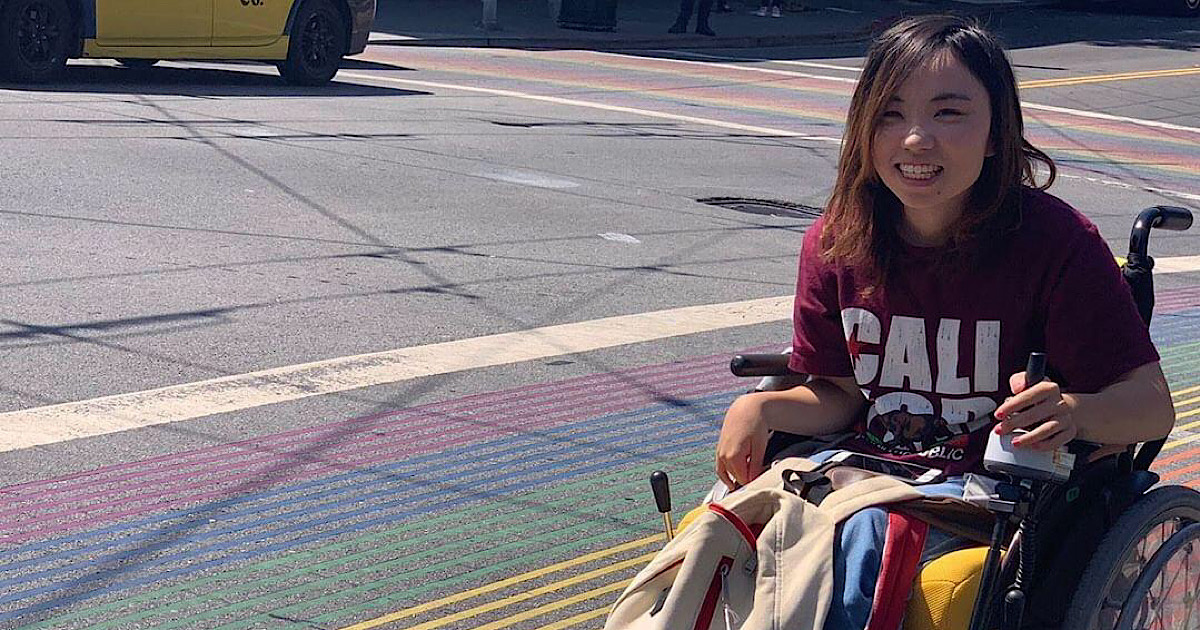
[Interviewer (Writer): Yafuso / Interviewee: miku]
Yafuso: When did you start aspiring to become a social worker?
miku: During high school, when I was choosing my career path, I was considering what to study in college and researching what jobs were available after graduation. That's when I came across the terms social worker and social welfare worker.
Yafuso: At that stage, had you already decided to pursue a career in welfare?
miku: I had heard from an older acquaintance who uses a wheelchair that they were studying welfare, which piqued my interest in what kind of work and studies were available. Since I use a wheelchair myself, welfare was something close to me, so I think that definitely played a part.
Yafuso: What was your college life like?
miku: The university I attended focused more on individual thinking, values, and ethics rather than just preparing for the national exam. Looking back, I realize they emphasized self-awareness and "facing oneself."
Yafuso: Did you also go for field training in preparation for the national exam?
miku: I went to a community comprehensive support center. I didn't think, "Because I'm disabled, I want to go into the field of disability welfare." I thought it might be disrespectful to compare myself. I had no particular preference for the target of support, so when I was thinking I might end up in a different field like child or elderly care, I happened to have a connection with the community comprehensive support center.
Yafuso: Was there anything particularly memorable during that time?
miku: The experience during that training was significant for me. The social welfare worker who supervised me was someone who handled consultations while doing home visits and other outside work.
Since I use a wheelchair, I wasn't sure how much I could do in terms of home visits or outside work. I thought it might be inevitable to stay behind more often, but that supervisor was amazing.
Even when visiting homes with many stairs, they took me along without any hesitation. They would actively ask people around, "Could you help lift her up?" even when there were steps to navigate.
Some families reacted negatively to having a wheelchair enter their home, saying it might dirty the floor. But the supervisor would assure them, "We'll clean the floor afterward," without ever apologizing. They never treated me as if to say, "Sorry for bringing someone in a wheelchair," and always saw me as an individual.
Yafuso: That's wonderful! You met someone whose example you wanted to follow.
miku: On the last day of my training, I asked, "Do you think someone like me can work in the field?" and they replied, "I think you can absolutely do it." If I hadn't had that experience, I might have given up on working in the welfare field. Knowing there was at least one person in the field who believed in me made me think there must be others, too.
1-2. Encouragement from a Mentor During College and Lessons Learned from Training in Boston
Yafuso: It seems like you had a very rich experience during your college years. Were there any words that encouraged or motivated you?
miku: I consider myself quite stubborn (laughs). I'm the type who can't stay silent when I think something is wrong. So, there were many times I thought, "I should be careful not to hurt others," or "Maybe I should be more considerate of the atmosphere."
But each time, various people valued that part of me and showed me through words and actions that "miku is fine just the way she is."
What left a strong impression on me was when a professor in college said, "miku, you are someone who can get rightfully angry when people's dignity is violated. Value that anger and use it as a driving force to move forward."
I often felt "alone" because I thought I was different from those around me, especially during my student years. I had my opinions, but sticking to them made me feel isolated.
When I was wondering, "Will I be alone like this for the rest of my life?" my professor taught me, "Raising your voice is lonely, but when lonely people connect, it becomes a strength. So continue doing what you believe you should do."
Since I trusted my professor, I felt that no matter how lonely I became, I should continue to value what I hold dear and keep doing what I need to do.
Yafuso: Those are truly wonderful words. I also heard that you went to Boston for overseas training. What was particularly memorable about that experience?
miku: I participated in a program where I did a six-month internship in Boston.
Before going for the training, I had a skeptical view of the "social model" (the idea that disability is a societal issue, not an individual one), thinking, "They say disability is a societal issue, but in the end, individuals are held responsible, and they have to endure and make efforts."
However, in the U.S., there's a strong movement where people raise their voices to protect their rights. Seeing that made me realize, "Instead of resigning because we're a minority, we need to speak up to change society."
I felt that if I want society to change, I first need to change myself.
Even though I'm part of society, just wishing for change is incredibly reliant on others. If I believe it should change, I learned that I need to take action to make it happen.
1-3. The Drive and Origins Behind Gathering 40,000 Signatures for a Petition to JR
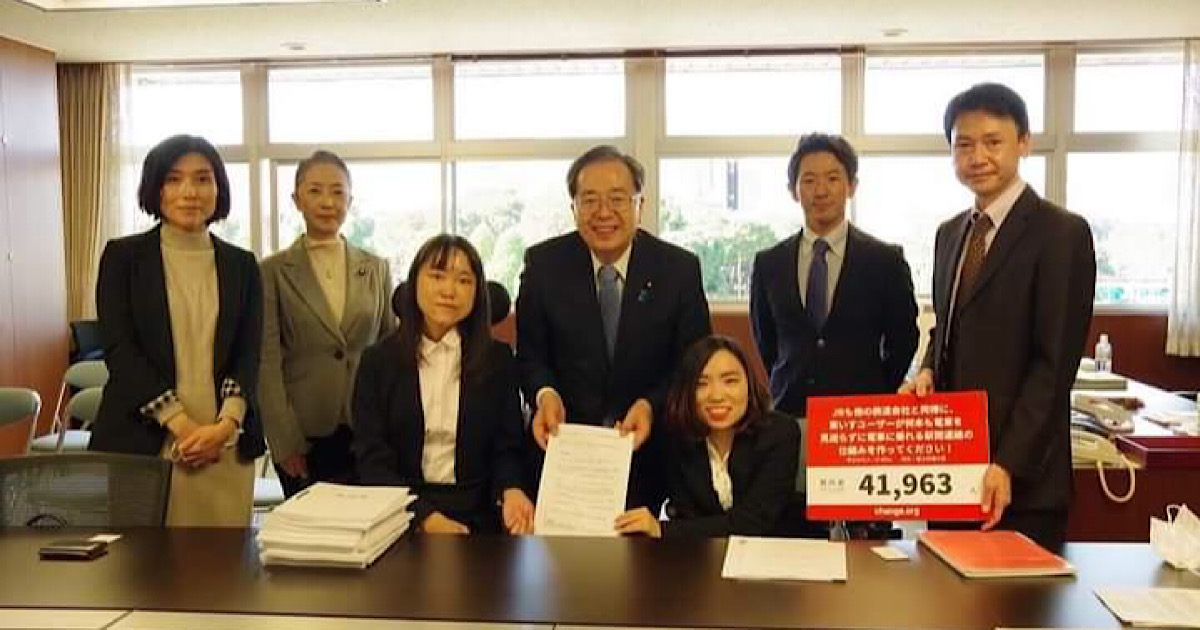
(Photo courtesy of Change.org.japan)
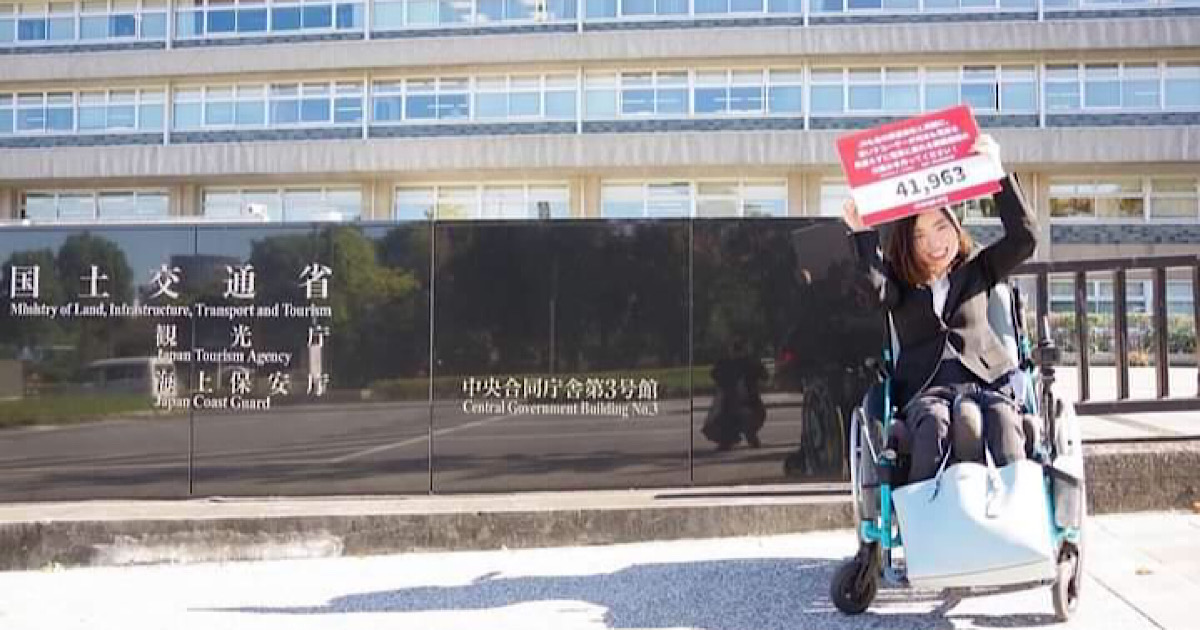
In April 2022, miku started a petition campaign to create a system that allows wheelchair users to board trains without having to wait for multiple trains to pass. By autumn of the same year, she submitted about 40,000 signatures to the Minister of Land, Infrastructure, Transport and Tourism.
Yafuso: Could you tell us what prompted the petition campaign?
miku: I'm the type of person who can't ignore someone else's unjust experience more than my own.
When I use the train, I often think, "Why do people who can walk get to hop on the train right in front of them, while we have to wait 20 to 30 minutes?" I had resigned myself to thinking, "That's just how it is for wheelchair users."
When I posted about this on Instagram Stories, a mother raising a son with disabilities responded.
She sent me a message saying, "Do we have to live with the sadness and frustration, thinking it's just a small thing we have to endure?"
Disability is not something anyone chooses, and no one is at fault. Why do we have to live as if we've given up on life? I felt powerless and wanted to change the way society makes people feel that way.
I know society doesn't change overnight, but I thought that if we could at least solve this issue with JR, it might encourage more mothers and people with disabilities to go out. I pondered for a few days about what I could do.
At that time, a friend who worked at the online petition site "Change.org" suggested that it was perfect for an online petition campaign and encouraged me to start one. After thinking about it for two days, I decided to go for it.
Yafuso: That's incredible initiative.
miku: I launched the petition page in the evening, and by that night, 1,700 signatures had already been collected.
From there, I shared it on Instagram and called on friends, and within four days of launching, we surpassed 10,000 signatures. "We might actually be able to change this together," I thought. We submitted 42,080 signatures to the Ministry of Land, Infrastructure, Transport and Tourism, and now it's about 46,000.
2. Things Don't Always Go As Planned, But Life Goes On
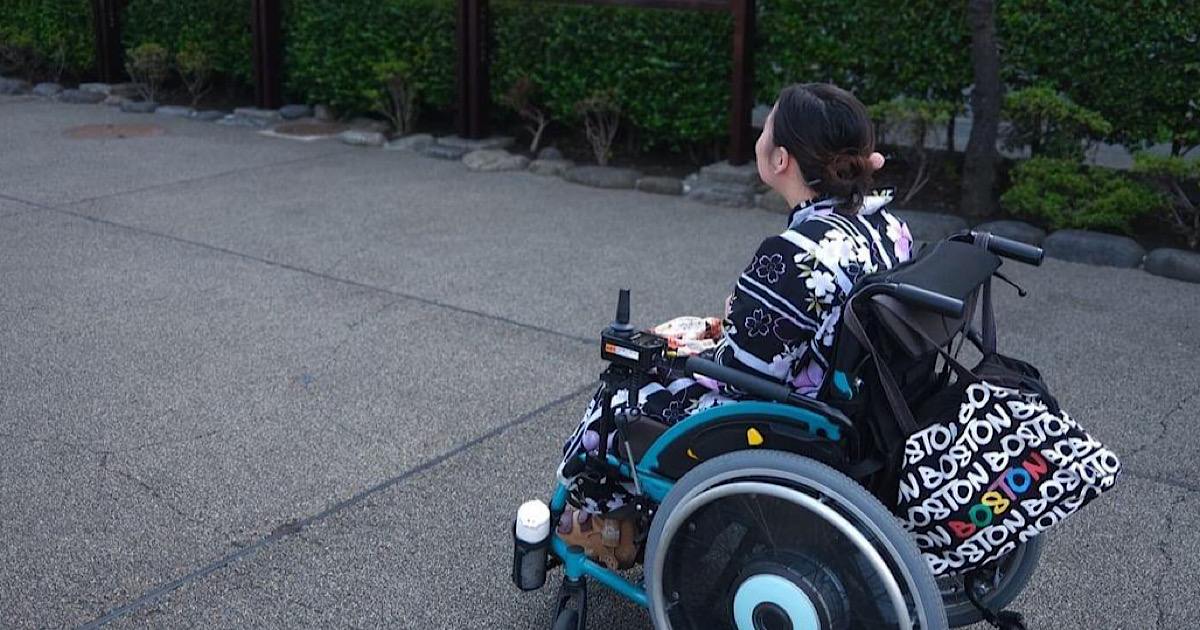
Yafuso: Have you ever experienced setbacks where "things you aimed for didn't come true"?
miku: For me and other wheelchair users, and perhaps for all people with disabilities, things not going as planned is the default.
Like when the place you want to go to only has stairs, or you can't board the train you want. I think life is inherently unpredictable, so I don't try to control it.
But of course, I've experienced failing exams or not achieving goals, and those are disappointing and frustrating.
Even if a goal isn't achieved, there's always another path, and when you look back, you might realize, "Because things didn't go well then, this path opened up, and that's connected to where I am now."
Even if things don't go well, I want to find meaning in it.
3. I'm Not a "Pitiful Person." What I Hold Dear to Achieve My Goals
Yafuso: What have you valued in achieving your goals, like starting to live on your own?
miku: Not just for achieving goals, but in daily life, I value being sensitive to my own discomfort.
There are times when you might think, "Is this really what I want to do?" or "I don't really want to do this, but everyone else is doing it, so maybe I should."
Ultimately, that's not living true to yourself. So I'm constantly asking myself, "What do I really think?" This is my core.
4. A Message for Readers
4-1. It's Okay to Say You Can't Do It Anymore, Don't Bear It Alone.
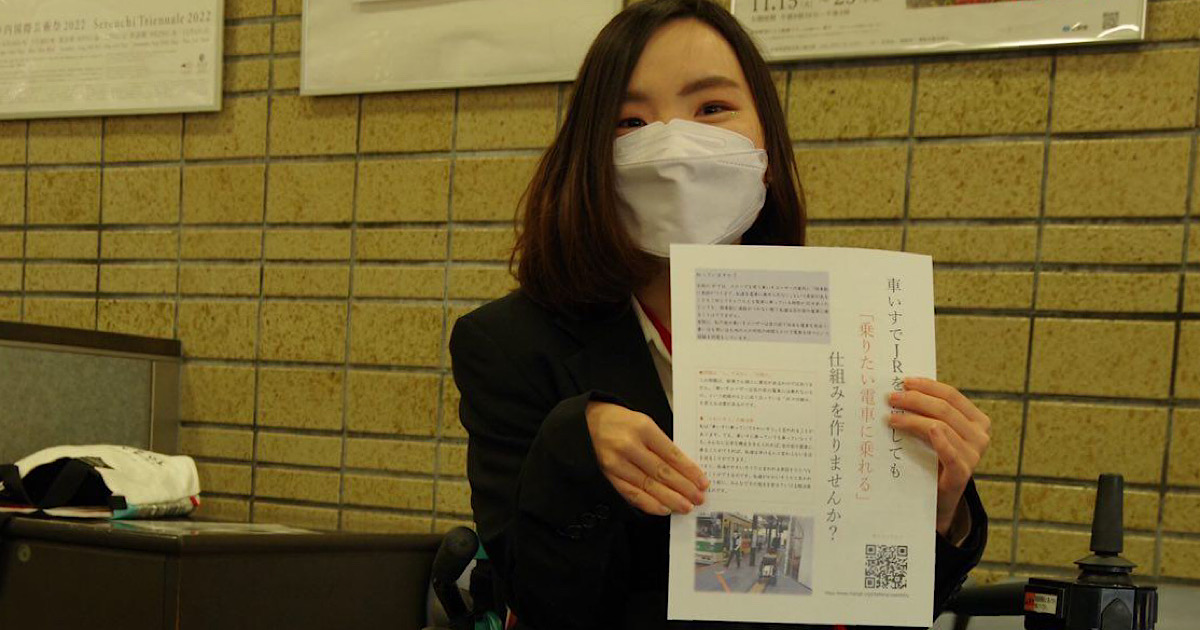
(Photo courtesy of Change.org.japan)
Yafuso: What motivates you to share your thoughts on platforms like Instagram?
miku: Firstly, it's because raising awareness is very important.
Also, this is just my impression, but sometimes people who share their stories seem too dazzling. Messages like "You can be happy even if you can't walk" or "Disability isn't unhappiness." Of course, everyone has their own way of living, so I don't oppose or deny those messages.
But life isn't just about that, and there was a time when seeing such messages felt overwhelming and exhausting. I wondered, "Is it wrong to feel troubled, or do I have to insist that I'm happy despite my disability?"
However, when I learned the importance of raising my voice in America, I felt that it's okay to share stories that aren't all glittery.
"There must be many people sharing glittery stories out there. I want to share something more human. It's okay not to be strong, and there's meaning in struggling," is the message I wanted to convey.
Of course, I share positive stories too, but I intentionally share my inner struggles because of these thoughts.
Yafuso: Have there been any particularly memorable reactions on social media?
miku: Often, people with disabilities react by saying, "I felt like you spoke for those who can't express themselves" or "You put into words the feelings I couldn't articulate." Receiving such feedback makes me feel glad.
4-2. You Don't Have to Suppress Your Feelings. It's Okay to Worry and Cry a Lot.
Yafuso: What would you like to convey to those in similar situations or those who are struggling?
miku: I'd like to say that it's okay to be troubled, and it's okay not to be okay sometimes.
Yafuso: As mentioned earlier, do you think that making overly glittery statements or portraying not worrying as something great is a bit off?
miku: I think it's impossible. Everyone worries about something, and even if life doesn't go as planned, there's always another path. So if you can think that it's okay to worry, and it's okay not to be okay sometimes, you'll probably be okay. That's how I feel.
Yafuso: Those are very empowering words, thank you.
4-3. Convey What You Want to Say Through Words.
(Photo courtesy of Change.org.japan)
Yafuso: Are there any memorable episodes with people who have supported you?
miku: There are many, but especially, I was able to interact with various people on an equal footing, regardless of disability, because I had friends who would get angry with me.
In elementary school, everyone helping me became the norm. They would pick up things I dropped and push my wheelchair without me saying anything.
That was a phase, and before I knew it, I started assuming people would help me without asking.
Then, a friend suddenly started avoiding me. When I asked why, they said, "miku, don't you think you're relying on everyone to help you just because you're in a wheelchair? Instead of saying it's inevitable because of your disability, if you need help, you should say it with words."
When they said that, it really struck me. I realized I was indeed relying on others, and from then on, I understood that I need to express what I can't do or what I want help with in words.
Yafuso: Are you still connected with those people?
miku: Yes, I'm still connected with those who said such things to me.
5. Disability Is No One's Fault.

Yafuso: Do you remember how your family explained your disability to you and at what age?
miku: Since I was born with it, I noticed the differences with those around me before any explanations. So rather than receiving a formal explanation, discussions about my physical disability naturally came up in daily conversations.
What I remember is reading a picture book called "Satchan's Magical Hand," about a girl born without fingers, with my mother.
My mother would repeatedly tell me, "Kouki, your disability is different from this girl's, but you were born a little early, and oxygen didn't reach your brain properly, so your hands and feet don't move well. But it's no one's fault. It's not your fault, and it's not Mom and Dad's fault either."
Through such conversations, I gradually understood my body. Thanks to that, I think I can now believe that "there's no point in blaming someone or myself for my disability".
6. In Conclusion
What I felt while talking with miku was not only her incredible drive but also her remarkable ability to articulate. Her sensitivity to everyday discomforts and societal issues, and her ability to express them clearly and accurately resonate with others and challenge us to think.
Between 2025 and 2026, miku realized her dream of studying in the United States. Her experiences are also shared on Instagram. If you're curious about miku, please check out her Instagram.
miku: Instagram


