

Some individuals struggle with their posture when using commercially available chairs, making it difficult to eat or participate in activities at school or in the community. There may be cases where people are unaware of seating support chairs, or even if they are aware, they may not know the types or costs involved, leading to confusion about where to seek advice.
Due to the removal of income restrictions for children with disabilities (under 18 years old) under the assistive device cost subsidy system, families that were previously "ineligible" may now qualify for cost assistance.
This article explains the basic knowledge about seating support chairs, their costs, and the process from application to completion. Additionally, for parents who are unsure whether a seating support chair can be taken out during outings or feel that travel is difficult for their child, we also introduce some tips for flying with these chairs.
Since it takes time for a seating support chair to be delivered after application, it is important to start the process early..
*This article contains information as of October 10, 2026. Please note that the operation of the assistive device cost subsidy system and the services of various airlines may change, so check with your local municipality and the official websites of the airlines for the latest information.
1. What is a seating support chair?
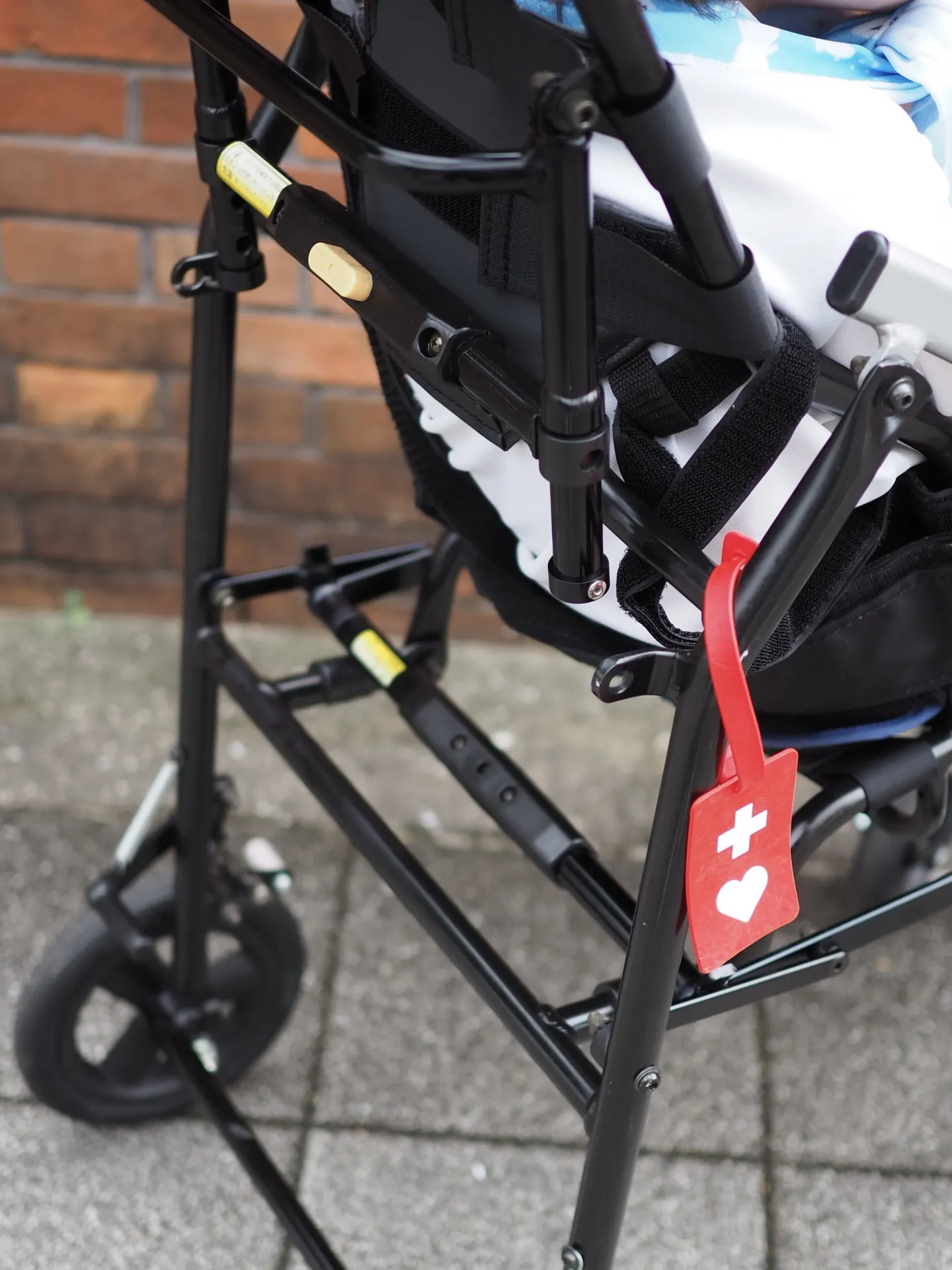
A seating support chair is designed for individuals with disabilities who cannot maintain proper posture in commercially available chairs, allowing them to sit stably. It is not merely a device to keep someone seated; rather, it is a tool that expands the range of daily activities in various situations.
By stabilizing posture, it can make it easier to use hands or enjoy meals more comfortably. The changes experienced will vary from person to person, so please consult with your child's physician or rehabilitation specialist regarding their specific condition.
Additionally, seating support chairs are officially referred to as "posture maintenance devices" (the name will change from "seating support device" in April 2024) and are covered under the assistive device cost subsidy system.
Reference:1 Types of Assistive Devices | Standards for Calculating Costs of Assistive Devices and Purchases (Ministry of Health, Labour and Welfare Notification No. 528)
Reference:Overview of the Assistive Device Cost Subsidy System | Chiba Prefecture
2. Types of Seating Support Chairs
The types of seating support chairs differ based on the construction of the "support part" of the posture maintenance device, and they can be categorized into three types:
Flat Shape Type
Molded Type
Tension Adjustment Type
The flat shape type supports primarily through a flat surface and maintains posture by combining various accessories. It is custom-made based on measurements.
The molded type supports through curved surfaces that match the shape of the body, maintaining posture by combining various accessories. It can be made either through measurements or by taking a mold.
The tension adjustment type utilizes the sag of the seat or multiple belts to support according to the shape or deformities of the body.
Previously, the "tension adjustment type" was referred to as the "seat tension adjustment type." Additionally, features such as "reclining," which allows for changing the angle of the backrest, and "tilt," which allows the entire chair to tilt while seated, can be selected separately from the type.
The suitability of each type and feature will be evaluated and considered by professionals such as physicians, physical therapists, occupational therapists, and prosthetists.
3. How to Obtain a Seating Support Chair?
For those who want to try using a seating support chair but are unsure how to obtain one, I have outlined the process to reach production.Please use this as a reference when creating a seating support chair.
3-1. The Basics are Custom-Made
Rather than ready-made products,the basic approach is to create a custom chair for each individual. A "statement of opinion" prescribed by a physician is required for production. You will need to consult with a manufacturer of welfare equipment, bring the statement, and go through measurements and prototypes. Since it is custom-made, it will not be immediately available after consultation.
3-2. How to Find a Consultation Destination
Manufacturers are located throughout the country, but if you are unsure where to consult,please ask your physician, rehabilitation specialist, or the disability welfare department of your local municipality. They may be able to introduce you to local providers.
4. Costs and Subsidies for Seating Support Chairs (Assistive Device Cost Subsidy System)
Since these chairs are custom-made, it is difficult to predict the total cost until completion. To reduce the financial burden, there is a public system called the"Assistive Device Cost Subsidy System" based on the Comprehensive Support for Persons with Disabilities Act.
4-1. The Self-Burden for Costs is Generally 10%
When utilizing the Assistive Device Cost Subsidy System, the self-burden is generally 10%. The maximum burden amount per month is determined based on income, with 0 yen for households receiving public assistance and those exempt from municipal resident tax, and 37,200 yen for households subject to municipal resident tax.
However,the 10% burden applies only to costs within the range of the standard amount set by the system. Costs exceeding the standard amount or for accessories not covered by the system may be the responsibility of the individual. The actual self-burden amount may vary based on the estimate, so please check with both the manufacturer and your local municipality.
Reference:Information for Families Utilizing Assistive Devices for Children (Appendix) | Child and Family Agency, Ministry of Health, Labour and Welfare
Reference:Overview of the Assistive Device Cost Subsidy System | National Center for Rehabilitation of Persons with Disabilities
4-2. Income Restrictions for Subsidies Were Removed in April 2024
Previously, if either the child with a disability or any household member, such as a parent, had an income above a certain level (the highest taxpayer's municipal resident tax income amount being 460,000 yen or more), they were excluded from receiving assistive device cost subsidies and were required to bear the full cost. As of April 1, 2024,this income restriction has been lifted for children with disabilities.
* JAL's body support belts are available up to 96 hours (4 days) before departure for both domestic and international flights.
You may be asked about age, height, weight, and the shape and method of using your own assistive devices. It is advisable to prepare notes in advance for a smoother process.
5-4. Tips from Families Who Have Flown
* The following is just one example. Please confirm in advance with the airline whether the methods of securing and using assistive devices are permitted on board.
Families who have actually used airplanes provided information to Ayumi.
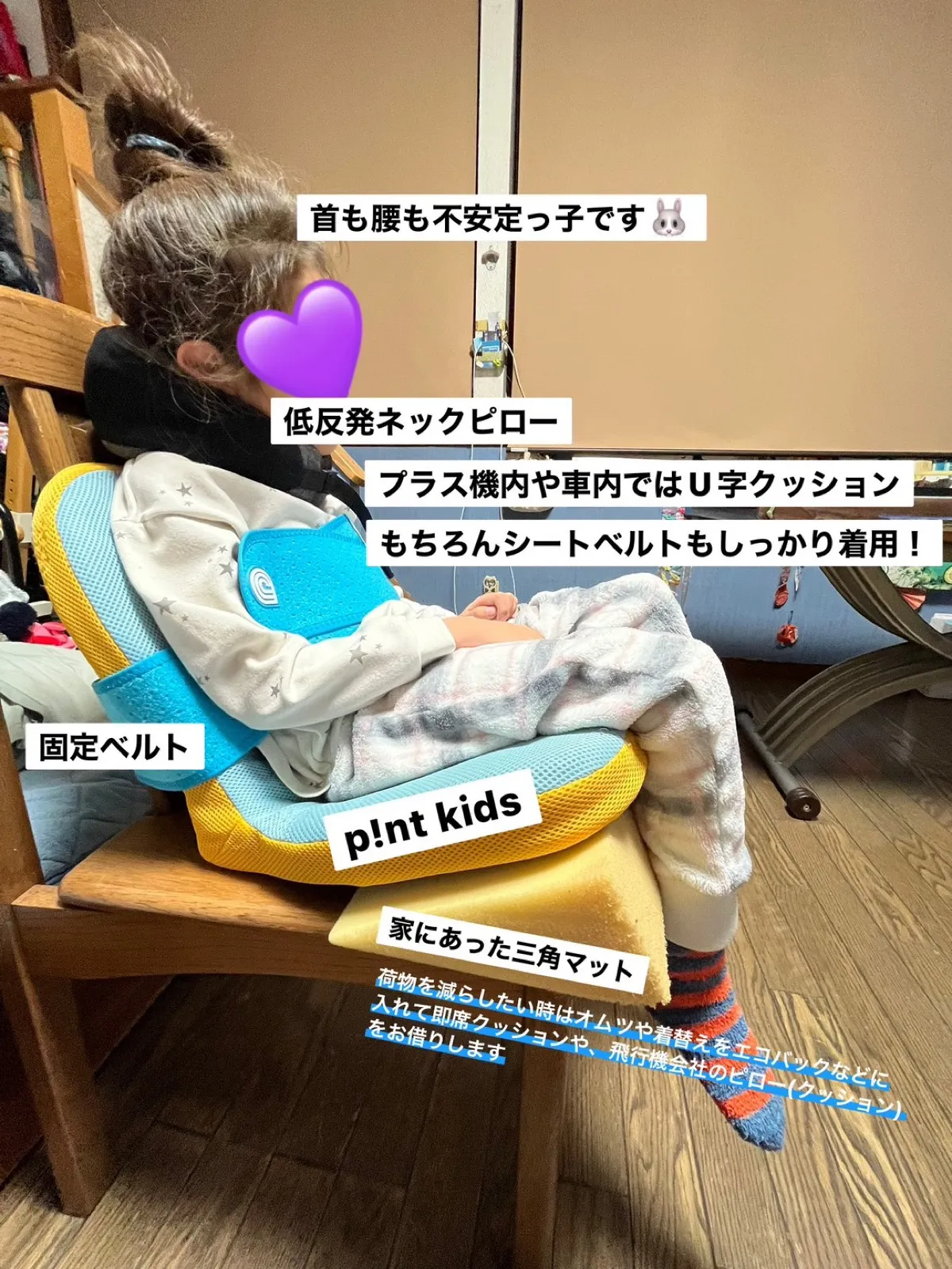
In the photo, the child maintains posture using a neck pillow, triangular mat, posture support cushion (p!nt kids), and securing belt. Depending on the situation, they may also use a U-shaped cushion. Diapers and changes of clothes can be packed into an eco-bag to serve as a makeshift cushion, or they may borrow a cushion from the airline.
They have gradually adjusted the setup to fit the child's body by combining available items.
The suitable method may vary for each child, and placing items around the neck may risk airway compression and affect breathing. Please avoid directly adopting the same method and consult your physician or rehabilitation specialist in advance. Additionally, some items may not be usable during takeoff and landing.
For general boarding procedures and disability discounts, please refer to related articles.
Reference:
Additionally, the organization "NPO Aeria," which connects the "gaps" in medical, welfare, and caregiving activities, shares records of nurses accompanying children requiring medical care on their travels. If you're interested, please check out their website.
6. Conclusion
This section summarizes the process, types, and costs associated with the production of seating support chairs. With the income restrictions for the assistive device cost subsidy system being lifted (for those under 18), there is now a possibility of qualifying for subsidies. It also touches on subscriptions for posture support cushions for infants and toddlers.
Additionally, it summarizes precautions for flying, assistive devices that can be borrowed, and items that can be brought on board, which we hope will be helpful.
When going out, considerations should vary depending on the child's condition and the medical care situation, so it is important to proceed after consulting with your physician and rehabilitation specialist. If you encounter any other issues, you can also consult with your local disability welfare office.
I hope that families who have given up on traveling with their children can use this article as a starting point for going out.
Share this article
Share This Article
Related Articles
Related Articles

Utilize Subsidies for Wheelchair Purchases! Explanation of Eligibility Criteria and the Process for the Assistive Devices Expense Payment System
Wheelchairs, prosthetic legs, white canes, and other assistive devices are essential for the daily lives of people with physical disabilities. Subsidies are provided when purchasing these devices. Here, we explain the overview of the subsidy system and the application procedures!

What Future Does Yu Yaga, CEO of Deai Kobo Co., Ltd., Envision in Aiming to Create Products that Eliminate Social Barriers?
For individuals with mobility impairments, wheelchairs are essential. However, existing wheelchairs may not always be suitable due to specific disabilities. Addressing these challenges, there is a company that manufactures custom-made wheelchairs. This time, we introduce Limited Company […]

Things to Know for Enjoying Travel in a Wheelchair | Comprehensive Guide on Travel Tips and Booking Methods
Are you giving up on traveling in a wheelchair because it seems too challenging? With proper research and preparation, comfortable and accessible travel is possible even in a wheelchair. This article is aimed at those who are considering giving up on travel or long trips for various reasons […]

Must-See for Families with Disabled Children! Introducing Allowance Systems and Financial Support Available
Families raising children with disabilities often face increased daily expenses, such as medical and therapy costs, as well as the cost of living supplies. Additionally, many of these families find it challenging to have both parents working, which can lead to a significant financial burden. To support these unstable situations […]

Three Preparedness Steps for Wheelchair Users Living Alone for Emergency Toileting Situations
The number one concern during a disaster is "toilets." This is especially true for individuals who use wheelchairs, as they face numerous challenges. Here, we have compiled measures that can be taken now to avoid panic when a disaster strikes.

7 Barrier-Free Museums to Encourage You to Visit in Fall 2026
Introducing a barrier-free art museum that encourages the idea of "you might be able to go" even with disabilities. This article explains the support available for viewing, the discounts for people with disabilities at the museum, and the types of disability certificates that can be used. We hope this serves as an inspiration for your outings. Please find a facility that suits you best.