

The Dementia Basic Law is legislation passed in June 2023 in response to Japan's super-aging society, aiming to enable people with dementia to live hopeful lives. This law specifically enacts the philosophy of
for dementia.
What benefits does this law bring to us as citizens?
This article will clearly explain the background of the Dementia Basic Law and eight specific measures and key points.
"My family member has been diagnosed with dementia, but how should we live in society from now on?" "I run a business, but how should I accommodate people with dementia?" If you have such concerns, please read to the end.
1. What is the "Dementia Basic Law" enacted on January 1, 2024?
The Dementia Basic Law, officially named "The Basic Law for Promoting the Realization of a Symbiotic Society," was passed in 2023 and enacted on January 1, 2024.
It is a law that promotes dementia measures in a planned manner, ensuring that people with dementia can live with dignity and hope in society.
Additionally, as suggested by its official name, the Dementia Basic Law aims to create a symbiotic society where every citizen, including those with dementia, respects and supports each other.
① All people with dementia can live their daily and social lives according to their own will, enjoying their basic human rights as individuals.
Source: About the Basic Law for Promoting the Realization of a Symbiotic Society|Ministry of Health, Labour and Welfare
② Citizens can deepen their correct knowledge of dementia and understanding of people with dementia, necessary for promoting the realization of a symbiotic society.
③ By removing barriers to daily or social life for people with dementia, all people with dementia can live independently and safely in the community as equal members of society, and can fully express their individuality and abilities through opportunities to express opinions on matters directly related to them and participate in activities in all fields of society.
④ While fully respecting the intentions of people with dementia, high-quality and appropriate health and welfare services are provided seamlessly.
⑤ Support for not only people with dementia but also their families ensures that they can live their daily lives safely in the community.
⑥ Research contributing to the realization of a symbiotic society is promoted, and the environment is prepared so that citizens can widely enjoy the results of research based on scientific knowledge on the prevention, diagnosis, and treatment of dementia and mild cognitive impairment, rehabilitation and caregiving methods, ways for people with dementia to participate in society while maintaining dignity and hope, and the establishment of a social environment where people with dementia can coexist with others.
⑦ Comprehensive efforts are made in education, community building, employment, health, medical care, welfare, and other related fields.
Based on the above basic principles, the national and local governments are obligated to implement various measures related to dementia.
Citizens are also expected to correctly understand dementia and contribute as members of a symbiotic society.
2. Background and Purpose of the Dementia Basic Law

The background of the Dementia Basic Law is closely related to Japan's "super-aging society."
According to statistics released by the Ministry of Internal Affairs and Communications, as of October 1, 2022, the proportion of the population aged 65 and over is 29.0%.
The World Health Organization (WHO) and the United Nations define a super-aging society as having a rate of 21% or more, and Japan ranks second in the world in terms of aging rate.
Currently, Japan's total population is 124.95 million, but it is expected to decrease to the 90 million range by 2070, with an aging rate of 39%.
Additionally, the number of people with dementia in Japan is also a serious issue.
The number of people aged 65 and over with dementia in Japan is estimated to be about 6 million as of 2020, and about 6.75 million by 2025, with one in approximately 5.4 people expected to have dementia.
Reference: How Many Dementia Patients Are There?|Life Insurance Culture Center
In response to Japan's super-aging society and the high rate of dementia, the government established the "Dementia Basic Law" as a foundation to realize a symbiotic society where people can live with hope even if they have dementia.
3. Eight Measures of the Dementia Basic Law
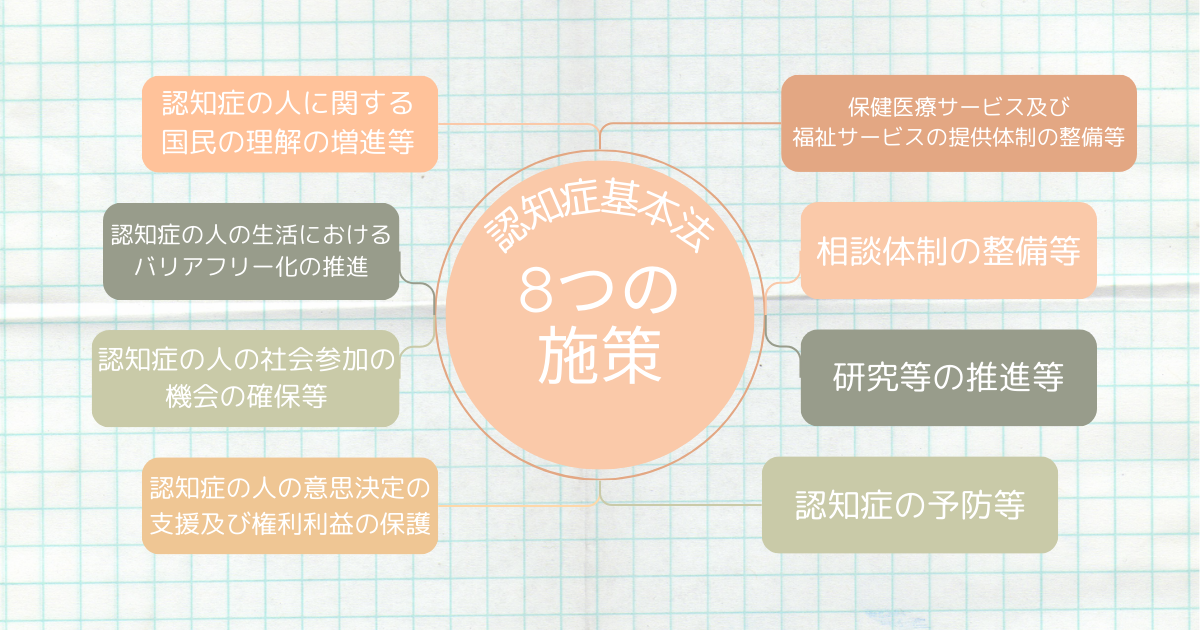
3-1. Promoting Public Understanding of People with Dementia
The national and local governments will build a symbiotic society by ensuring that citizens have correct knowledge and understanding of dementia.
By ensuring that everyone understands the correct knowledge about dementia, it is ideal to create an environment where people with dementia can live safely without facing wrong prejudices or responses.
To achieve this, nationwide initiatives to spread correct knowledge about dementia are necessary.
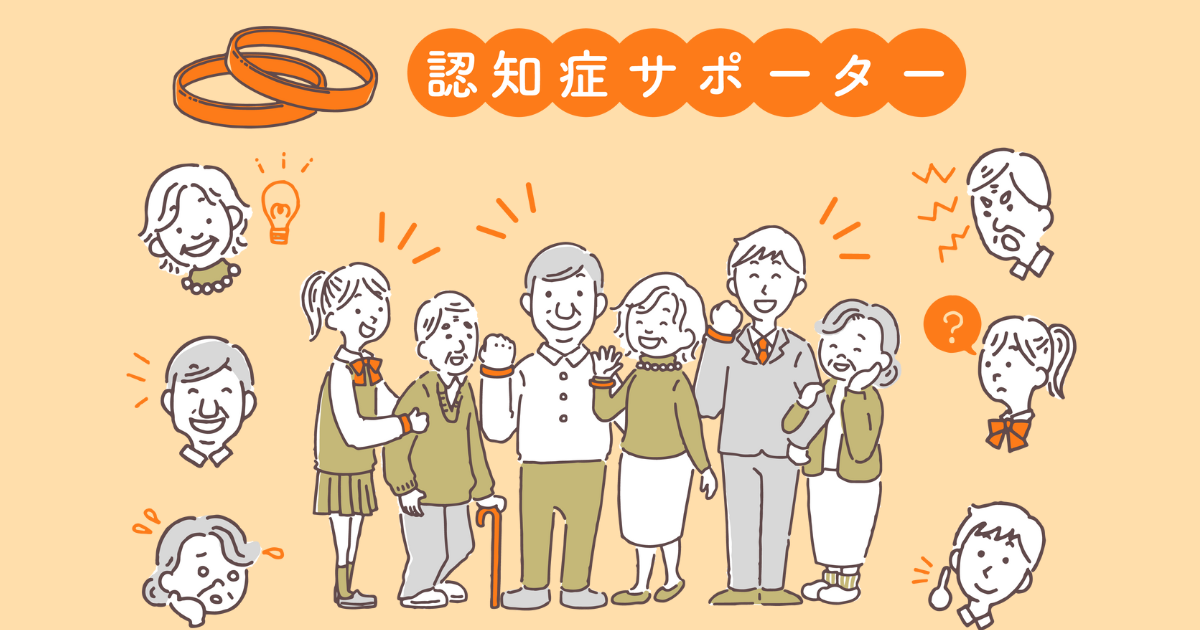
As part of creating dementia-friendly communities, courses to train "Dementia Supporters" are held nationwide.
A Dementia Supporter is someone who has correct knowledge and understanding of dementia and helps people with dementia and their families within their capacity in the community.
Reference: Dementia Supporter|Ministry of Health, Labour and Welfare
3-2. Promoting Barrier-Free Living for People with Dementia
Symptoms of dementia include motor function impairments such as walking and balance.
To enable people with dementia to live independently, promoting barrier-free environments is necessary.
The national and local governments, in collaboration with businesses, will promote the development of products and services that are easy for people with dementia to use.
3-3. Securing Opportunities for Social Participation for People with Dementia
Maintaining connections with society even after developing dementia is the first step toward realizing a symbiotic society.
In terms of employment, it is recommended to provide opportunities to work, considering the abilities of those with early-onset dementia who develop it before age 65.
Additionally, providing opportunities for people with dementia to share their experiences with the public plays an important role in understanding dementia.
As part of promoting social participation for people with dementia, the Ministry of Health, Labour and Welfare has appointed seven people with dementia as "Ambassadors of Hope" to increase opportunities for direct communication from those with dementia.
These Ambassadors of Hope cooperate in the government's dementia awareness activities and give lectures based on experiences that only those affected can share.
Reference: Dementia Ambassadors "Ambassadors of Hope"|Ministry of Health, Labour and Welfare
3-4. Supporting Decision-Making and Protecting Rights and Interests of People with Dementia
People with dementia may find it difficult to make decisions due to decreased judgment ability.
Once affected by dementia, legal actions such as making lifetime gifts or entering facility contracts become impossible.
In daily life, the opportunities for individuals to make choices based on their own will may become extremely limited.
Therefore, to appropriately support decision-making and protect the rights and interests of people with dementia, the Dementia Basic Law will establish guidelines.
Specifically, this includes providing information that enables people with dementia to make their own decisions and conducting awareness campaigns to prevent consumer harm.
3-5. Establishing a System for Providing Health and Welfare Services
Continuous medical and welfare services are essential for people with dementia to live safely.
To ensure that appropriate medical and welfare services can be received regardless of where one lives, it is necessary for the national and local governments to collaborate in establishing a medical service provision system.
Additionally, a seamless service provision system tailored to individual symptoms and living conditions is also needed.
3-6. Establishing a Consultation System
The establishment of a consultation system is a measure to prevent isolation of people with dementia and their supporting families.
Due to the risk of rapid symptom progression from stress caused by isolation, the national and local governments and related organizations plan to establish a consultation system where people with dementia and their families can easily seek advice.
Support will also be provided for activities that allow people with dementia and their families to interact with each other.
For example, a "Dementia Café" is a place where people with dementia, their families, and local residents can gather casually.
There are over 6,000 dementia cafés nationwide where anyone can easily consult.
You can search for dementia cafés across the country from the following site.
Reference: Dementia Café Search|Nakamaaru
Reference: Our Dementia Café|Ministry of Health, Labour and Welfare
3-7. Promoting Research

There are various types of dementia, such as Alzheimer's and vascular dementia, but the causes are not fully understood.
Regarding treatment methods, there are currently only ways to slow progression rather than fundamentally cure the condition.
Therefore, the government has launched initiatives to focus on research into the causes and treatments of dementia.
Additionally, research on creating a social system where people with dementia can live safely will also be advanced.
3-8. Dementia Prevention
The national and local governments will implement measures necessary for raising awareness about dementia prevention, promoting community activities, and collecting information for those who wish to participate.
If dementia symptoms are mild, extending healthy life expectancy is one of the benefits of this measure.
Additionally, measures to strengthen cooperation with medical institutions for the early detection of dementia are also included.
If dementia can be prevented and detected early, it may be possible to reduce the number of dementia patients overall.
4. Five Expectations from the Measures of the Dementia Basic Law
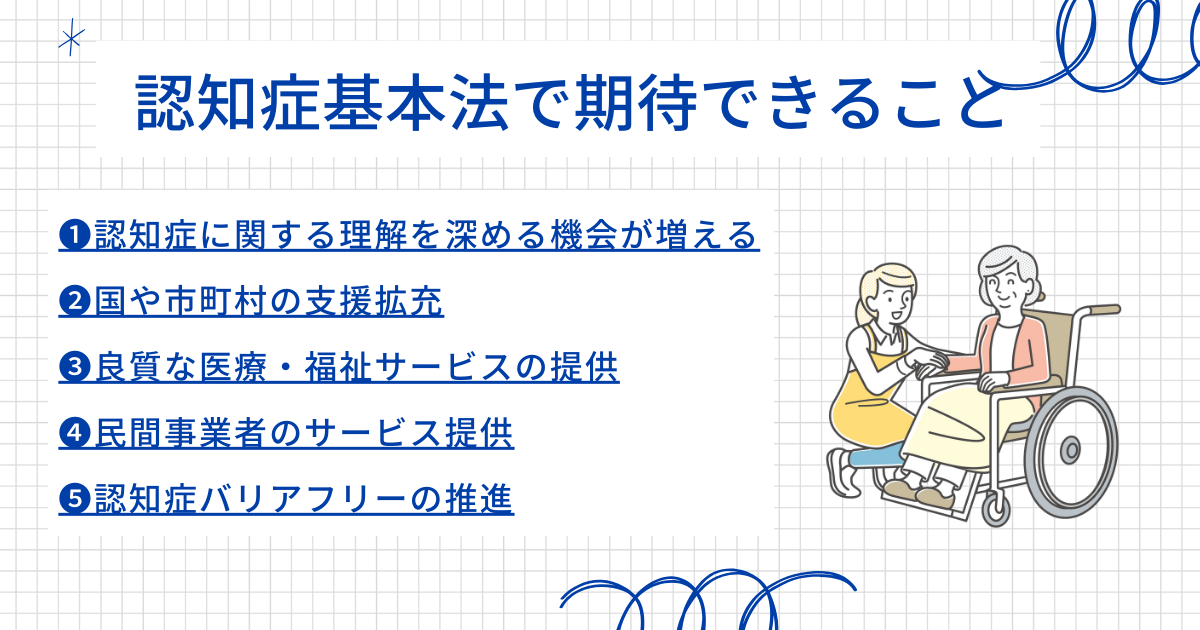
The measures of the Dementia Basic Law have just begun, and there are currently no specific laws or ordinances.
However, it is expected that not only the national and local governments but also private businesses will create a society where people with dementia and their supporting families can live more easily.
Here, we will explain what can be expected from the enactment of the Dementia Basic Law.
4-1. Increased Opportunities to Deepen Understanding of Dementia
Many organizations have been conducting activities to deepen understanding of dementia, but it is challenging for the entire population to gain a deep understanding.
If one is not directly affected or thinks "it doesn't concern me," few people will voluntarily try to understand dementia.
However, it is important to remember that in the future, one in five elderly people in Japan may be a dementia patient.
Therefore, it is expected that learning about dementia will become commonplace in compulsory education and that workshops will be held in communities.
4-2. Expansion of Support from the National and Local Governments
Currently, if diagnosed with dementia, the following social security systems are available.
- Self-Support Medical System (Outpatient Mental Health)
- Mental Disability Health and Welfare Handbook
- Special Disability Allowance
- High-Cost Medical and Long-Term Care Combined Benefit System
By utilizing the above systems, medical expenses can be reduced to 10%, and various discounts can be applied in daily life.
With the enactment of the Dementia Basic Law, the enhancement of social security due to dementia is expected.
If you want to know more about the Self-Support System and the Mental Disability Health and Welfare Handbook, please refer to the following articles.
Reference Article:
Reference Article:
4-3. Provision of Quality Medical and Welfare Services
Medical and welfare services that directly care for people with dementia play an important role.
The Ministry of Health, Labour and Welfare is promoting training to improve the dementia response capabilities of medical and caregiving personnel.
Additionally, by promoting training for primary care physicians to improve dementia response capabilities and training dementia support doctors, dementia prevention and early detection are expected.
4-4. Service Provision by Private Businesses
For private businesses, services and products that consider people with dementia are expected.
For example, reasonable accommodations are required for essential living items like appliances and mobile phones that are easy for people with dementia to use.
Reasonable accommodation refers to adjustments made to ensure that all people, regardless of disability, can enjoy the same human rights and fundamental freedoms.
If you want to know more about reasonable accommodation, please refer to this article.
Reference Article:
4-5. Promotion of Dementia Barrier-Free Initiatives
Dementia barrier-free initiatives aim to remove barriers (barriers) caused by dementia.
As part of this initiative, the Japan Dementia Public-Private Council is promoting the "Dementia Barrier-Free Declaration."
Additionally, a "Guide for Realizing a Dementia Barrier-Free Society" has been created, summarizing various situations and industry-specific responses for people with dementia.
Thus, promoting barrier-free initiatives is expected to continue to create a society where people with dementia can live safely and comfortably.
Ayumi, which operates this media, is developing a "Barrier-Free Certification Business" for businesses.
Reference: Business Content|Ayumi
Reference: Dementia Barrier-Free Declaration|Japan Dementia Public-Private Council
Reference: Guide on Hospitality for People with Dementia (Dementia Barrier-Free WG Initiatives)|Ministry of Health, Labour and Welfare
6. The Necessity of Dementia Barrier-Free Initiatives

People with dementia have the right to choose their lifestyle according to their own will.
However, when dementia occurs, symptoms such as decreased motor function and memory impairment appear, causing significant disruptions to daily life that were not previously barriers.
The barriers faced by people with dementia can be broadly categorized into "physical barriers" and "attitudinal barriers".
Physical barriers refer to physical obstacles such as steps and narrow passages that arise when a person with dementia becomes a wheelchair user due to decreased motor function.
On the other hand, attitudinal barriers refer to obstacles in people's minds, such as prejudice, discrimination, and indifference from others.
For example, the mistaken belief that "people with dementia become completely unaware" can isolate and hurt those with dementia.
Such barriers can deprive people with dementia of the freedom to make choices according to their own will.
If dementia barrier-free initiatives are prioritized and developed, the lives of people with dementia will become richer and more hopeful.
Moreover, the "symbiotic society" advocated by the Dementia Basic Law can be realized.
7. Conclusion
We have explained the content of the Dementia Basic Law and what can be expected from its specific measures. Additionally, Ayumi's team includes a social worker and care manager who supervised this article to provide readers with more understandable and accurate information.
The Dementia Basic Law is legislation aimed at enabling people with dementia to live hopeful lives while recognizing individual dignity and striving for a symbiotic society. Dementia is a familiar condition that can affect anyone.
Through this law, the author hopes that each citizen will reconsider and engage with dementia.


