
![Wheelchair Accessible! 13 Selected Welfare Vehicles [Decided]](/_next/image/?url=https%3A%2F%2Fstorage.googleapis.com%2Fpixseo-1eeef.firebasestorage.app%2Fmedia%2Fimages%2F1776377510861_____.webp%3FGoogleAccessId%3Dfirebase-adminsdk-fbsvc%2540pixseo-1eeef.iam.gserviceaccount.com%26Expires%3D16447017600%26Signature%3DYX4uB1H7g0bpZEl2Bj6xVAveOVCL8JkQTDiItl4cuaKBnbTvUTdhsKSqRKlLt4Bh4laFuJ7c2vjmfHg%252FmzufaWCL9NU49qHW3MRqA8udyZCYW5PYRjWsg8M1dLrdexrgKJqEyfiBxUOlgnj1q9Z8KqCH5lOHqXX5sbLVuByzV40GbDcGFZDp3D1QYr2tR%252F%252Be8IDoqfY5ATtnoN7EWHtuAauIfA6j%252BdmZ1heMak3BAvTBFznxldVnYin4Fm3pBOIdkAdUDkJlPeiogr4eUxfqua2V33Y6LohMnXOZlOrYAaytM5aovWu8Ac%252FIFpdkflBJq2URAR4zqYs84GjbvplNDA%253D%253D&w=1920&q=75&dpl=dpl_3BmogHtYmiXYG3RoP2q1D2Q7GeNH)
1. There Are Two Types of Wheelchair-Accessible Welfare Vehicles
Welfare vehicles mainly come in two types: "self-operated vehicles" and "care vehicles."
Self-operated vehicles are equipped with driving assistance devices so that individuals with limited hand or foot mobility can drive them.
On the other hand, care vehicles are designed to assist those who find getting in and out of cars challenging, making them friendly not only for the person being cared for but also for the caregiver.
Welfare vehicles are available from the five major manufacturers—Toyota, Nissan, Honda, Suzuki, and Daihatsu—with over 30 different models released. Prices range from approximately 2 million to 5 million yen for new vehicles, with the "drive-in type" that allows wheelchair access being the most common. The selection varies from compact cars to large minivans, offering a wide range of options.
However, the choice of vehicle can vary significantly depending on family size, wheelchair size, the driver's height, and parking space at home. There are many regrets from buyers who purchased based on dealership recommendations, only to find "the slope is too steep, making assistance difficult," or "the interior is too cramped for long-distance travel."
This article, aimed at wheelchair users and their families or caregivers, compares 13 models from Toyota, Nissan, Honda, Suzuki, and Daihatsu based on price and features, outlines five key points for choosing the right vehicle, explains available tax reduction and subsidy programs, and details the test drive and purchase process, as organized by the general incorporated association Ayumi in the 2026 latest edition.
1-1. "Transfer Type" from Wheelchair to Seat
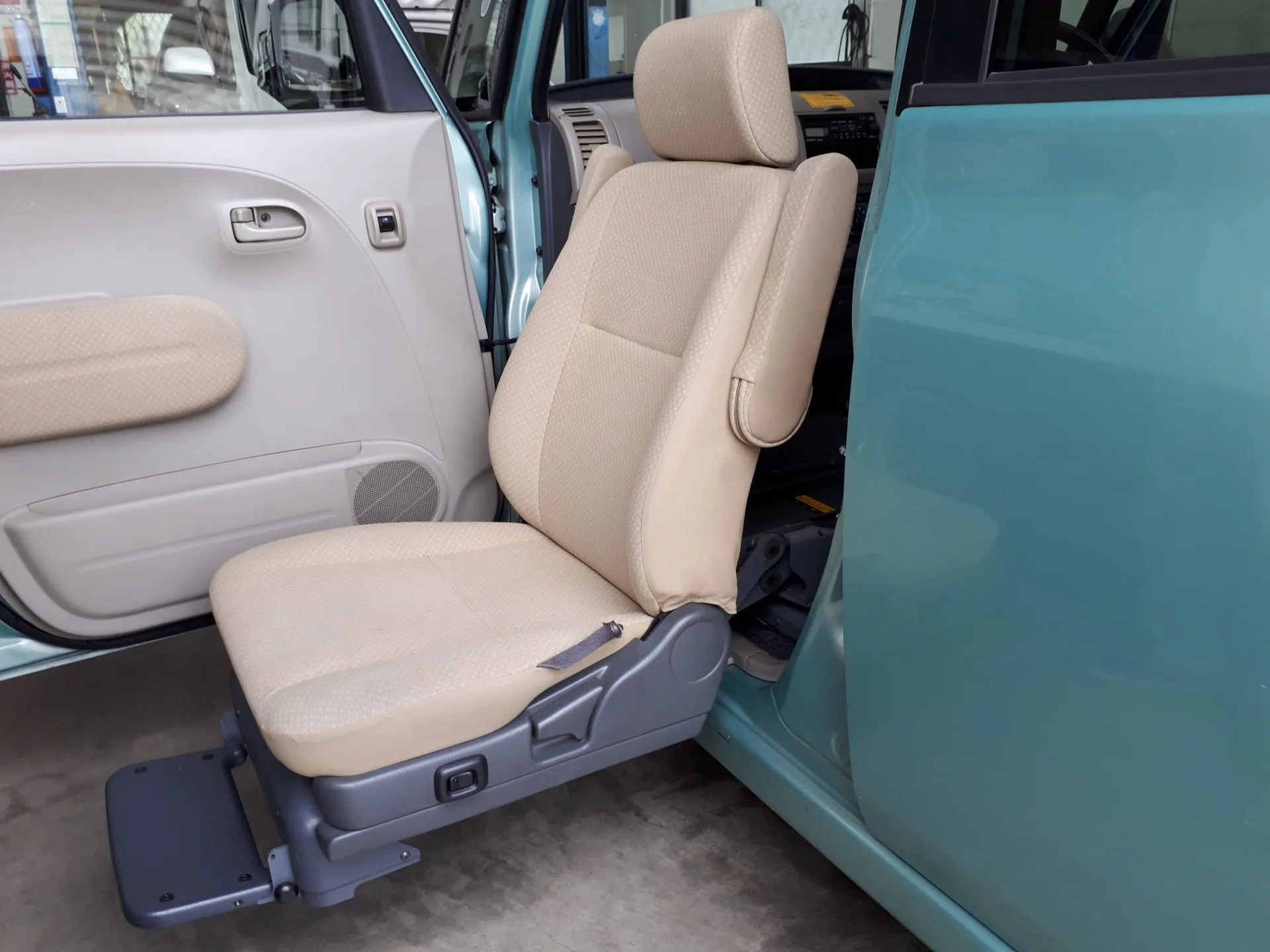
1-2. "Drive-in Type" for Wheelchair Access
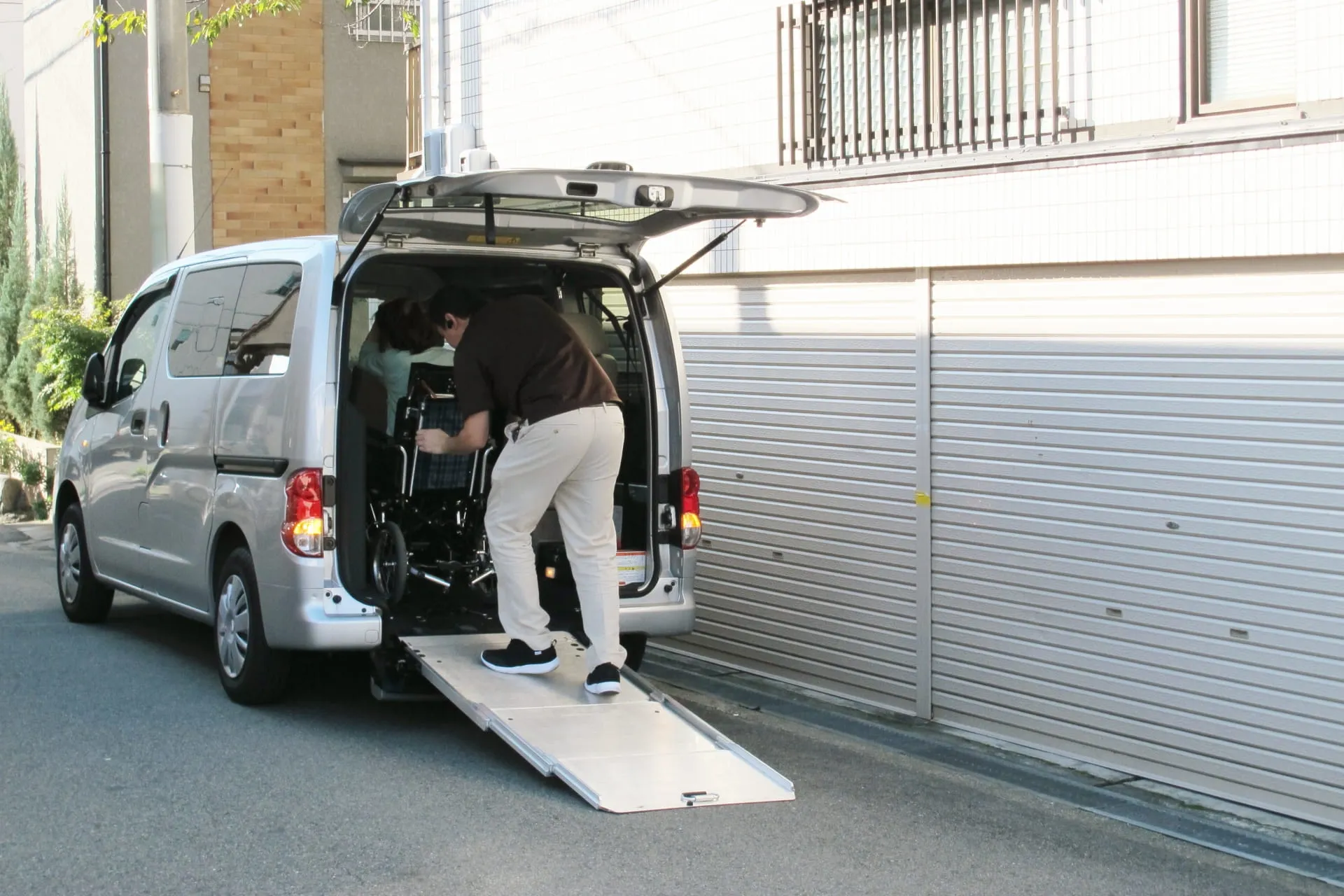
Using a ramp or lift installed at the rear door of the vehicle, wheelchair users can easily board and alight.
This time, we will introduce recommended welfare vehicles of the "drive-in type" by model!
2. [Standard Cars] 7 Recommended Welfare Vehicles for Wheelchair Access
2-1. Toyota Sienta
The Toyota Sienta is a minivan with a compact body and three rows of seats.
There are three specifications, with Type I being the most standard. It comes with a manual ramp at the rear, allowing wheelchair users to sit in the second row behind the front passenger seat. Caregivers can sit in the adjacent seat, ensuring a safe ride.
Type II allows a wheelchair to be secured in the 1.5th row, making it suitable for children using wheelchairs as it is within reach from the driver's seat.
Type III lowers the vehicle height and deploys a short ramp when the back door is opened, enabling quick and space-efficient boarding and alighting. (Type III is designed for corporate use, such as day services or care facilities familiar with wheelchair use.)
2-2. Toyota Voxy
The welfare vehicle version of the Voxy is available in two types: Type I and Type II. Type I offers "one wheelchair" and "two wheelchair" specifications, while Type II features a layout where the wheelchair user sits in the third row.2-3. Toyota Noah
The Toyota Noah, a minivan, also offers welfare vehicle options. The "pull-out ramp" used with a belt for securing the wheelchair is simple to operate, considering the caregiver's needs. It accommodates various wheelchairs, including reclining and electric ones, and if you choose Type I, a stretcher can also be loaded.参照:ノア 福祉車両|トヨタ
2-4. Honda Freed Crosstar
The "wheelchair-accessible vehicle" of the Honda Freed Crosstar is based on the five-seater "Freed Crosstar," and when a wheelchair user is on board, it becomes a six-seater with five passengers plus one wheelchair user.2-5. Honda Stepwgn Wheelchair Specification Vehicle
The "Honda Stepwgn Wheelchair Specification Vehicle" aims to provide peace of mind and freedom for both wheelchair users and caregivers, thanks to its spacious interior and well-equipped features.
The wheelchair seating position can be selected from the second row, third row, or both, and it accommodates all types of wheelchairs. Moreover, the third-row seat can be easily stored under the floor by simply pulling a strap at the shoulder, thanks to the "Magic Seat," allowing for a flat boarding space to be quickly and easily created, making it very convenient.
Additionally, it comes standard with an electric winch (belt winding device) and a power tailgate that can memorize the opening angle of the tailgate (back door), making it safe to use even in places with obstacles behind.
The interior features a flooring floor, which is not only aesthetically pleasing but also easy to clean. The triple-zone control full-auto air conditioner allows for temperature settings in the driver's seat, passenger seat, and rear seats, ensuring an excellent interior environment.
3-4. Nissan NV100 Clipper Rio
The Nissan NV100 Clipper Rio Chair Cab is a welfare vehicle designed with the concept of a "small wheelchair-accessible vehicle that can accommodate a large wheelchair."
Despite being a compact kei car, it offers ample interior space that allows even reclining wheelchairs to be comfortably accommodated. The design allows for a wheelchair and regular seats to be placed side by side, enabling a total of four passengers. The slope has a load capacity of 200kg, making it reliable for heavy wheelchairs or situations requiring assistance.
Additionally, advanced safety features such as collision mitigation brakes and lane departure warning are standard across all grades, enhancing its appeal as a safe choice.
4. [One-Box Vehicles] Recommended Welfare Vehicles for Wheelchair Access
4-1. Toyota Hiace
The Toyota Hiace, a one-box car, also offers models that accommodate wheelchair users.
With a higher floor compared to minivans, it features an electric lift for boarding and alighting, which is a distinctive feature.
It offers a variety of body sizes and interior layouts, allowing for the comfortable accommodation of two large wheelchairs or a stretcher. With a maximum capacity of up to 10 passengers, it is ideal for outings with large groups.
4-2. Nissan Caravan
The Nissan Caravan wheelchair-accessible vehicle (Chair Cab) is a comprehensive welfare vehicle that meets a wide range of needs, from business to private use.
It includes a fully automatic lifter operated by remote control, and a "shuttle type" with dedicated equipment to assist boarding and alighting.
It boasts a class-leading interior length*, ensuring comfort during drives.
*For wheelchair-accessible vehicles with a width of 1,700mm or less (5-number width) as of July 2025, according to Nissan research.
5. How to Choose a Welfare Vehicle Without Regrets
To avoid regrets when choosing a welfare vehicle, you must consider factors such as the presence of seat belts and headroom, taking into account the lifestyle of the user. The following points will be explained in detail to help you choose wisely.
5-1. Can Seat Belts Be Used?
When riding in a wheelchair, existing seat belts may not be usable. It is essential to check whether the wheelchair has proper securing devices and if seat belts for wheelchair users are equipped.
5-2. Is There Enough Headroom?
When riding in a wheelchair, having sufficient headroom is crucial. If using a large wheelchair or if the wheelchair user has a high sitting height, headroom may become limited. To ensure comfort during drives, always check if there is adequate ceiling space.
5-3. What About the Wheelchair Entry Position?
When selecting a welfare vehicle, you must also confirm the actual boarding position for the wheelchair user.
If assistance is needed during the ride, check whether a caregiver can sit next to the user or if the position is reachable from the driver's seat..
5-4. Can You Test Drive?
While specifications can be checked online and reviews read, it is also important to test drive the vehicle in person when selecting a welfare vehicle. Experiencing the interior space and visibility firsthand can reveal many insights.
6. Summary of Welfare Vehicle Tax Reductions and Subsidies!

When purchasing or using a welfare vehicle, local government tax reduction and subsidy programs may apply. (Some municipalities may not have such programs.)
The following six are representative programs related to welfare vehicles:
① Reduction of Automobile Tax Environmental Performance and Classification Rates
② Exemption from Consumption Tax
③ Municipal Subsidies
④ Low-interest Loans from Social Welfare Councils
⑤ Highway Toll Discounts
⑥ Others
We will briefly explain the overview of each system and the eligible individuals.
① Reduction of Automobile Tax Environmental Performance and Classification Rates
This system provides reductions or exemptions for vehicles used for people with disabilities..
Conditions and application methods vary by prefecture, so be sure to check with your local prefecture in advance.
② Exemption from Consumption Tax
For many welfare vehicle models, consumption tax on the vehicle body, optional items, and repair costs is exempt..
However, some welfare vehicles are not exempt, so be sure to confirm in advance whether the vehicle is tax-exempt.
However, some welfare vehicles are not exempt, so always check if they are tax-exempt.
Reference: Vehicles for Persons with Disabilities|National Tax Agency
③ Municipal Subsidies
When modifying a vehicle to a welfare vehicle or purchasing a modified welfare vehicle, some municipalities may offer subsidies or grants ranging from 100,000 to 300
Since buying a car is never a cheap purchase, you want to carefully consider what suits you best. When making your purchase, be smart and take advantage of the subsidy and grant programs introduced in this article. We sincerely hope you can enjoy a comfortable car life.


